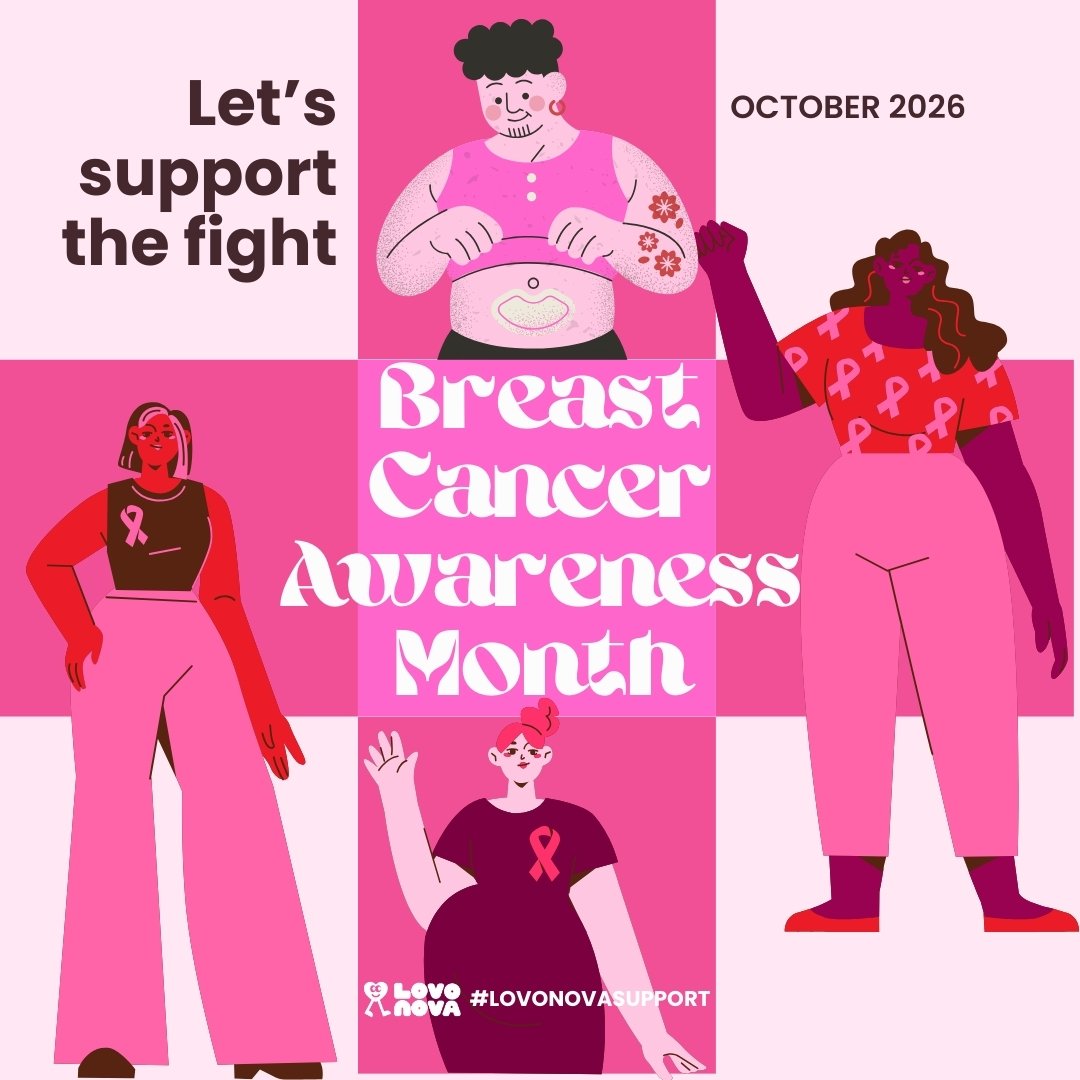
Breast Cancer Awareness Month 2026
✨ Every Story is Unique, Every Journey Matters ✨
This Pink October, the world comes together under this theme. Breast cancer remains the most common cancer among women worldwide — in 2024, 2.4 million women were diagnosed and 694,000 women died from the disease, with 8.2 million women living with breast cancer by year’s end (WHO, 2026).
🎗️ Breast Cancer Isn’t Only a Women’s Disease
Men have breast tissue too, and while male breast cancer is rare, it still accounts for about 1% of all breast cancers — around 600 cases a year in France alone. Risk increases with age (most cases are diagnosed after 60), family history, and BRCA2 gene mutations (linked to roughly 15% of male breast cancers), as well as Klinefelter syndrome and liver cirrhosis. Because awareness is so low, men are often diagnosed later — which is exactly why symptoms should never be ignored, regardless of gender (Ligue contre le cancer, France).
🌈 Unique Challenges for the LGBTQAI+ Community
LGBTQAI+ people face unique challenges on top of this: navigating healthcare systems, finding inclusive providers, and dealing with stigma around identity and care.
🏥 A landmark NIH study cited by the CDC, tracking over 87,000 premenopausal women, found both lesbian and bisexual women had a slightly higher predicted breast cancer incidence than heterosexual women — 131.61 and 131.72 per 100,000 person-years, versus 122.55 (NIH/CDC, USA).
🏥 In 2024, an estimated 160,000 new cancer cases were expected among people who identify as LGBTQ+, who overall face higher cancer incidence than the general population (ACS, 2025, USA).
🏥 Transgender people are significantly less likely to be offered screening appropriate to their bodies, and less likely to be screened for breast and cervical cancer compared with cisgender people. Breast cancer risk is also higher for transgender people assigned male at birth than for cisgender men (ACS, 2024, USA).
🏥 Compared with heterosexual people, sex and gender minorities experience more delays in diagnosis, are more likely to decline recommended treatment, and have three times the rate of breast cancer recurrence — often linked to a lack of trust in healthcare providers (JAMA Oncology, 2023; Stanford Medicine, 2023, USA).
💗 These disparities show why inclusive, compassionate, and equitable healthcare is essential — for women, men, and trans people alike.
🌍 Where You Live Shouldn’t Determine Whether You Survive
Access isn’t equal everywhere: 41% of women in low-income countries survive at least five years after diagnosis, compared with 87% in high-income countries — around 70% of breast cancer deaths occur in low- and middle-income countries (WHO, 2026).
This Breast Cancer Awareness Month, Let’s:
- ✨ Share and uplift LGBTQ+ voices living with breast cancer
- ✨ Remember that men and trans people can get breast cancer too — check your body, whoever you are
- ✨ Demand inclusive screening and equitable access to care, everywhere in the world
- ✨ Support survivors with empathy, dignity, and solidarity
Every story is unique. Every journey matters. No one should face breast cancer alone. 💪