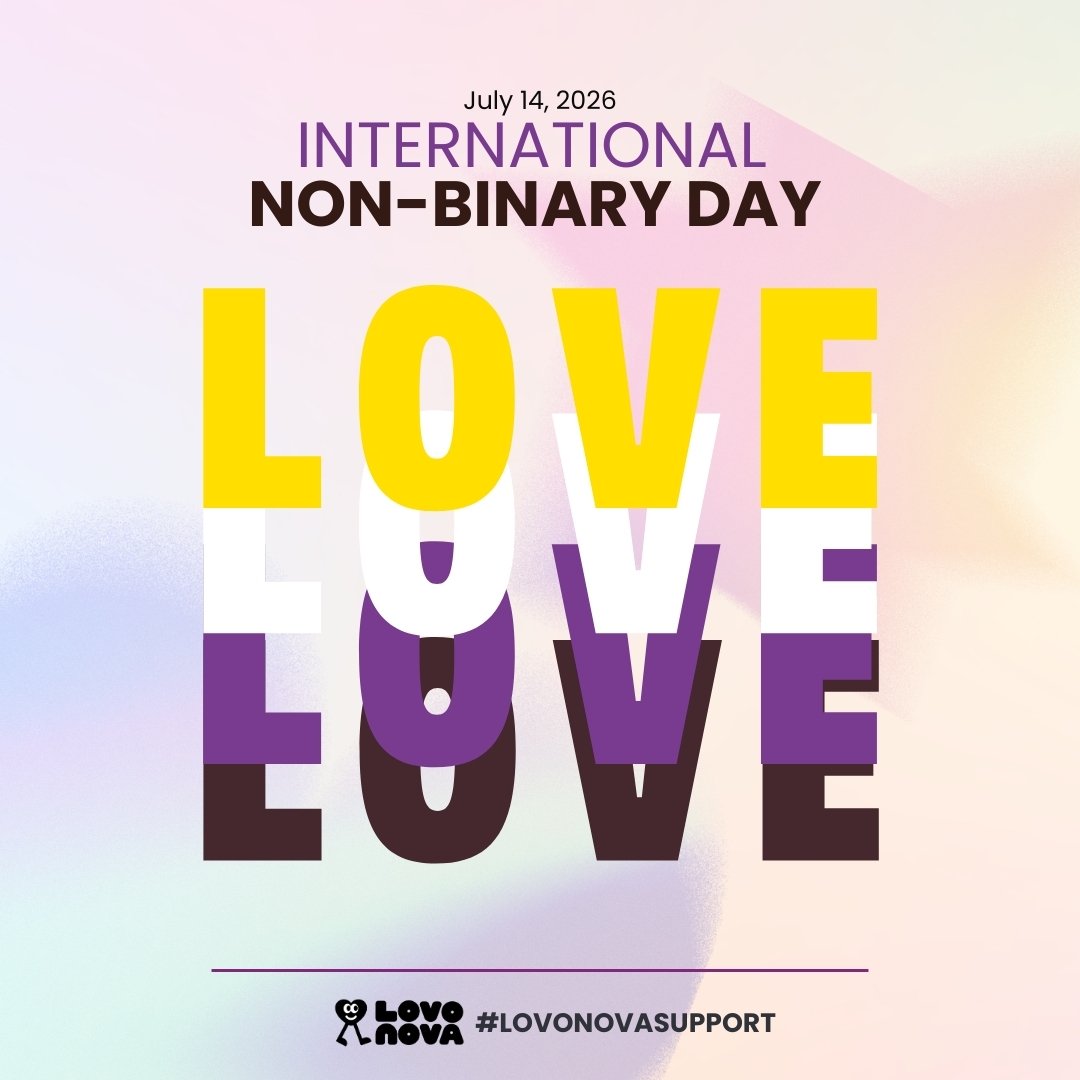
International Non-Binary People’s Day 2026
Lovo Nova · Culture & Pride
Beyond the
binary.
Beyond labels.
International Non-Binary People’s Day
Non-binary people are nothing new. Identities that exist beyond or between the male/female binary have been recognized by cultures and societies around the world for millennia.
Today, we celebrate, learn, and show up for the non-binary people in our communities.
What does non-binary mean?
Non-binary is an umbrella term for gender identities that exist outside the traditional binary of male and female. Non-binary people may identify as both genders, neither, somewhere in between, or as something else entirely.
Observed every July 14 — chosen to sit between International Women’s Day and International Men’s Day — this day exists to raise awareness and organise around the issues still faced by non-binary people worldwide.
“My mum had a book about drag and it was the first time I saw anything out of the binary.”
In many countries, there is still no legal recognition for non-binary people. That means no gender marker options on official documents, no protection in healthcare, and no visibility in public policy.
Non-binary identities have been recognized across cultures worldwide
Non-binary people aren’t confused or following a trend. They are part of a long, global, and deeply human tradition of existing beyond rigid gender categories.
Setting the record straight
Common misconceptions
Pronouns & titles
Pronouns are a basic part of language. Non-binary people may use they/them, she/her, he/him, or other pronouns entirely. If you are unsure, ask — and consider sharing your own pronouns as well.
Titles like Mr. and Mrs. indicate a binary gender. Mx. is a widely used gender-neutral alternative that many non-binary people prefer. Using it when someone asks costs nothing — and means everything.
How to show up today
You do not have to fully understand what it means to be non-binary to treat non-binary people with dignity and respect. Here is where to start.
Practical steps
Every identity deserves recognition.
Lovo Nova celebrates every gender, every pronoun, every expression — every day of the year.
Discover Lovo Nova